Tourism in Maldives
Tourism is the most important industry in the Maldives and plays a major role in the country’s economic development. Known for its crystal-clear waters, white sandy beaches, and vibrant coral reefs, the Maldives has become one of the world’s most popular tropical destinations. Every year, millions of tourists travel to the island nation to experience its natural beauty, luxury resorts, and unique marine environment.
Importance of Tourism
Tourism is the backbone of the Maldivian economy. It contributes a large share of the country’s Gross Domestic Product (GDP) and generates most of the foreign exchange earnings. The industry also creates thousands of jobs for local people in resorts, hotels, transportation services, restaurants, and tourism-related businesses. Because of this, tourism plays a vital role in improving living standards and supporting economic growth in the Maldives.
Tourist Arrivals

The Maldives receives millions of international visitors each year. Tourist arrivals have steadily increased as the country continues to expand its tourism facilities and promote itself as a luxury holiday destination. Visitors come from many parts of the world, with major markets including China, the United Kingdom, Russia, Italy, Germany, India, and the United States.
Types of Tourist Accommodation
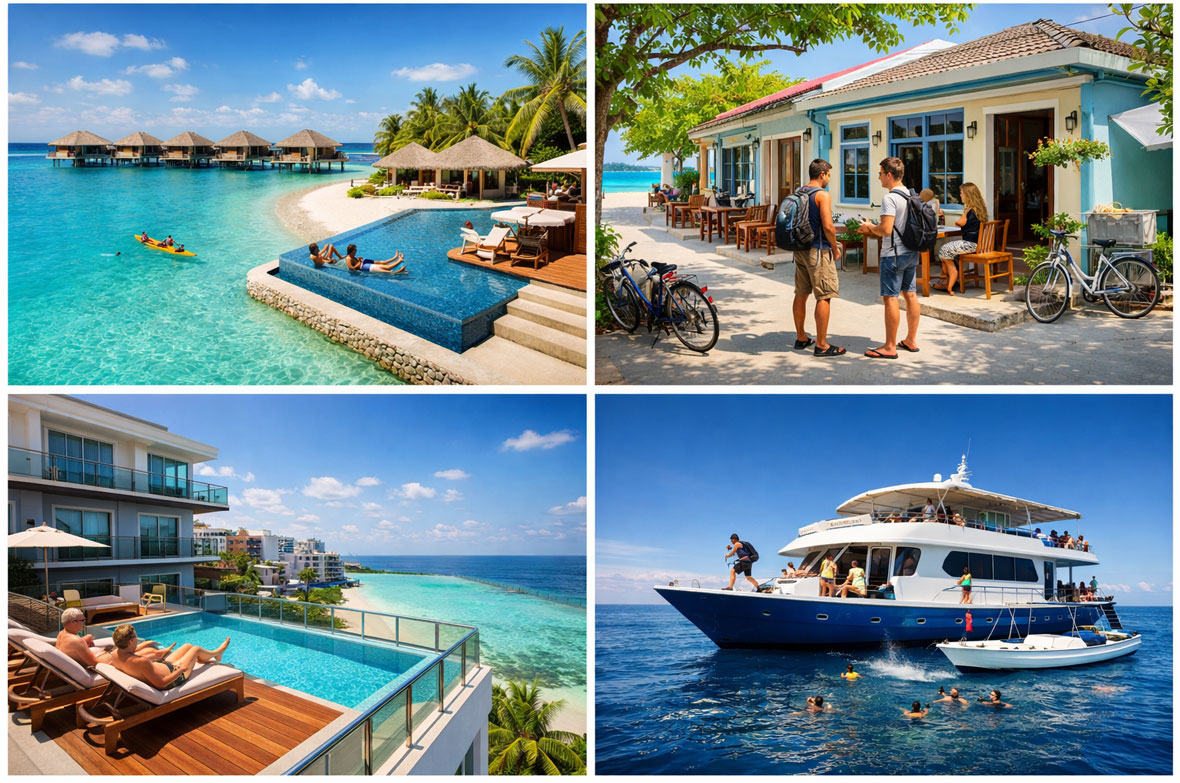
The tourism industry in the Maldives offers several types of accommodation to meet the needs of different travelers.
Resorts: Luxury private island resorts are the most well-known form of tourism accommodation in the Maldives. These resorts offer high-end services, private villas, overwater bungalows, and exclusive experiences.
Guesthouses: Guesthouses are smaller and more affordable accommodations located on inhabited islands. They allow tourists to experience local culture and lifestyle while enjoying the natural beauty of the islands.
Hotels: Hotels are mainly found in urban areas and provide comfortable accommodation for travelers visiting cities and nearby islands.
Safari Boats (Liveaboards): Safari boats are specially designed vessels used for diving and island-hopping trips. Tourists stay on the boat while exploring different atolls and marine locations.
Tourist Attractions
The Maldives offers a wide range of attractions that draw visitors from around the world. The country is famous for its white sandy beaches, turquoise lagoons, and diverse marine life. Scuba diving and snorkeling are among the most popular activities, as the coral reefs are home to colorful fish, sea turtles, manta rays, and whale sharks.
In addition to underwater experiences, tourists enjoy water sports such as surfing, jet skiing, kayaking, and paddleboarding. The Maldives is also a popular destination for honeymooners and couples seeking a peaceful and romantic getaway.
Positive Impacts of Tourism
Tourism has brought many benefits to the Maldives. It has strengthened the national economy, created employment opportunities, and encouraged the development of infrastructure such as airports, transport networks, and communication systems. Tourism has also helped promote Maldivian culture and traditions to the international community.
Challenges of Tourism
Despite its many benefits, tourism also presents certain challenges. The rapid growth of tourism can place pressure on the natural environment, especially coral reefs and marine ecosystems. The country also relies heavily on tourism as its primary economic sector, which can make the economy vulnerable to global crises such as pandemics or economic downturns.
Additionally, climate change and rising sea levels pose long-term risks to the islands and the tourism industry.

Conclusion
Tourism is the driving force behind the Maldivian economy and a key contributor to the country’s development. With its breathtaking natural beauty, world class resorts, and unique marine environment, the Maldives continues to attract visitors from around the globe. By promoting sustainable tourism practices and protecting its fragile ecosystems, the Maldives can ensure that tourism remains a strong and sustainable industry for future generations.


About Post Author